Is Somalia Close to Fully Taking Over Its Own Security?
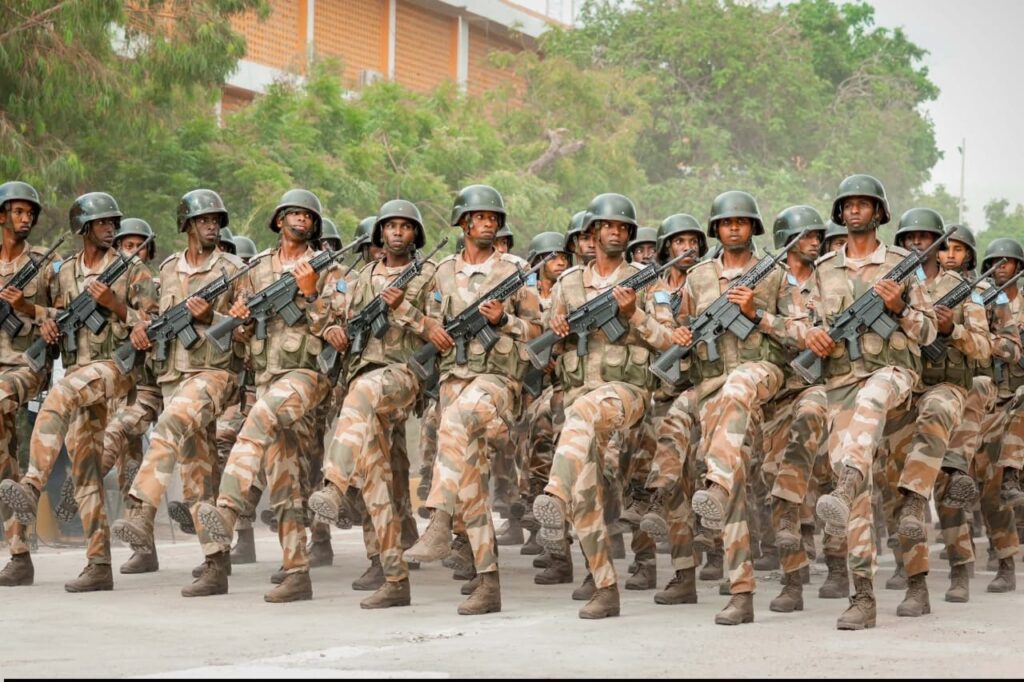
The debate over Somalia's security future has intensified following concerns about funding for the African Union Support and Stabilization Mission in Somalia (AUSSOM). For more than two decades, African Union forces have served as a backbone for efforts supporting Somali troops in the fight against Al-Shabaab and protecting key government installations. However, a new discussion is emerging: if the substantial funds spent on this mission were gradually redirected to the Somali National Army, could Somalia reach a level where it is fully capable of securing itself?
This question is not merely economic—it touches on the future of Somali statehood. Every country in the world aspires to have a national army capable of defending its territory, protecting its borders, and ensuring the safety of its citizens. Somalia has long sought to reach that level, despite still facing security and political challenges.
Supporters of this idea believe that direct funding of Somali forces could create a modern army with consistent training, adequate equipment, and reliable salaries. They argue that a soldier who feels job security and steady support will perform his duties better. Furthermore, investing in military bases, training facilities, medical services, and security technology could build lasting capacity that does not depend on the presence of foreign troops.
However, security experts point out that funding is only one part of the equation. A strong military requires professional leadership, unified command, a clear operational plan, an efficient system for managing finances, and close cooperation between the Federal Government and regional states. If these elements are neglected, even significant funding may not deliver the expected results.
It is also important to remember that modern security is not just about the number of soldiers. Today's operations rely on accurate intelligence, rapid communication, transportation, medical care, equipment maintenance, regular supplies, and high-level planning capacity. These have long been part of the support provided by international missions. If Somalia wants to fully take over security responsibilities, it must be able to build all these components equally.
On the other hand, the country's political situation also plays a crucial role. When there are political disputes or disagreements between the Federal Government and regional states, it becomes harder to have a unified approach to security. This shows that security and politics are closely intertwined, and progress in one affects the other.
Nevertheless, Somalia today is not what it was twenty years ago. The Somali National Army has received extensive training, combat experience, and international support. Somali troops are leading many operations against Al-Shabaab, demonstrating visible progress compared to previous years. That progress is why the debate over transferring security responsibilities has become real and worthy of deep consideration.
If the international community chooses in the future to redirect some of the funds spent on AUSSOM toward building and strengthening Somali forces, Somalia may get a chance to accelerate the process of establishing a self-sufficient national army. However, the success of that endeavor will depend on administrative transparency, consistent security sector reform, accountability, and earning the trust of the public.
Ultimately, the future of Somalia's security will not be determined by money alone. It will be determined by how that money is managed, how strong institutions are built, and how political and security leadership work together toward the goal of Somalia having a national army capable of defending the country and maintaining peace. If these elements come together, there could be a real opportunity for Somalia to transition into a phase where it fully takes its security into its own hands.